The Dutch healthcare system is under pressure. Demand for care is rising, costs are increasing, and the staffing shortage is growing. AI can help alleviate these issues. Think of reduced administrative work, faster and more accurate diagnoses, and more focus on prevention and personal health.
AI in Healthcare
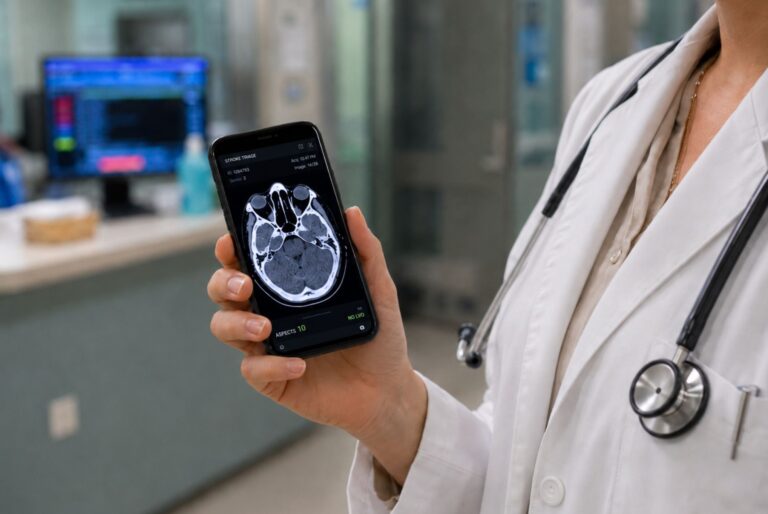
The range of AI applications has grown significantly in recent years. Medical image analysis leads the way, with more than 200 applications already available. Speech recognition and generative AI are streamlining administrative tasks. Predictive AI is gaining ground in intensive care units (ICUs) as well as in neonatology, cardiology, multiple sclerosis (MS) care, and mental health care.
By 2025, more than half of hospitals were using generative AI, primarily for medical data processing, administrative support, and patient records. Yet only 2% of AI innovations reach the market. Scaling up is difficult due to legal and ethical frameworks, limited data access, and a shortage of expertise. Computing power and venture capital are also scarce, and healthcare institutions vary greatly in their readiness for AI. The fragmented nature of the healthcare system makes these issues particularly difficult to resolve.
Vision
In AIC4NL’s Health and Care focus area, we are working to create a sector in which AI contributes to high-quality, accessible, and affordable care in a responsible, reliable, and people-centered manner. Technology can only have a societal impact when healthcare institutions, companies, research institutions, the government, and patients work together. Public values, transparency, and trust are paramount in this effort.