A 2023McKinseystudy predicted a 20 to 40 percent increase in productivity driven by generative AI. But if you ask employees today how AI is affecting their work, the reality turns out to be different. AI isn’t a magic wand. It’s much more interesting than that.
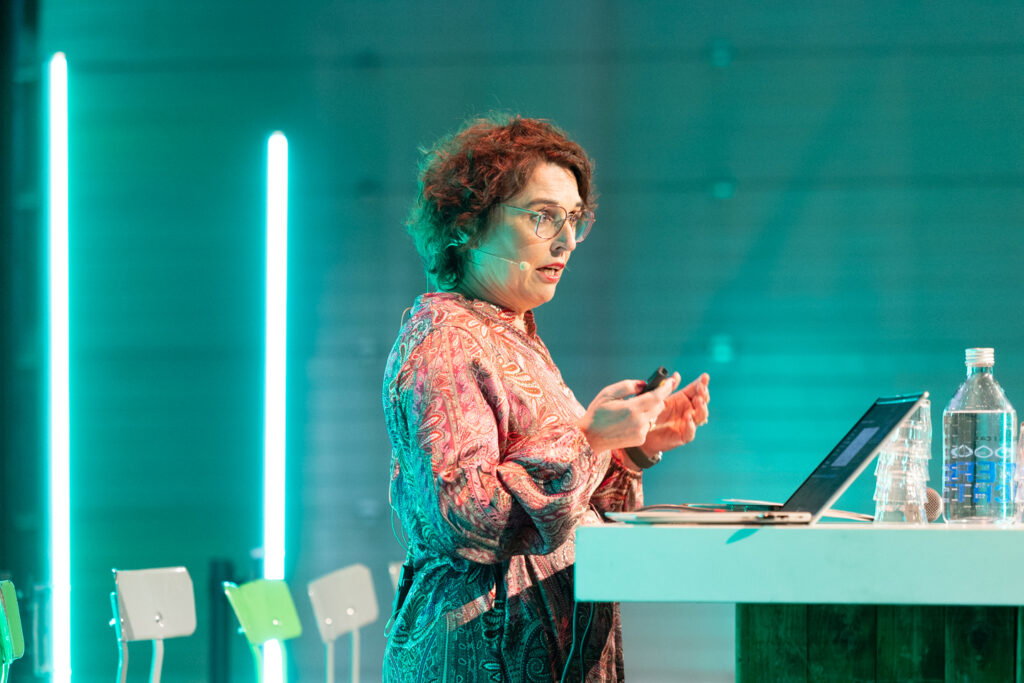
Marloes Roelands, Head of the Talent, Knowledge, and Skills Division at AIC4NL, at the Dutch AI Congress 2026.
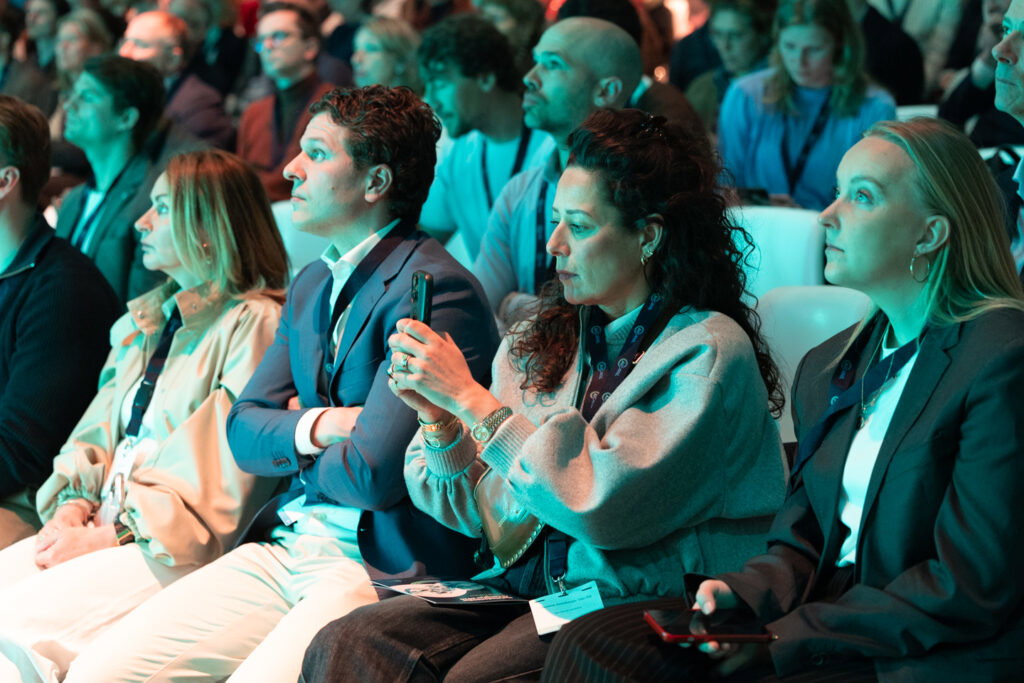
During the breakout session “Talent, Knowledge, and Skills” at the Dutch AI Congress, attendees were asked to describe, in one word or a short sentence, how AI is affecting their work. “Not much,” “chaos,” and “nothing” were frequently mentioned, but so were “acceleration” and “innovation.” The promised leap in efficiency has yet to materialize, but in the meantime, work is becoming increasingly complex.
Learning, Working, and Experimenting
In January 2026,a study by the World Economic Forum revealed that 54 percent of jobs will change and that 24 percent new jobs will be created. Jobs aren’t simply disappearing; rather, their nature is changing. This is also evident from the Npuls report“AI, Curriculum & Labor Market” (June 23, 2026), to which Marloes Roelands (Area Leader for Talent, Knowledge, and Skills) contributed on behalf of AIC4NL. AI takes over tasks and supports employees, but it also creates new work, such as evaluating AI output. Manual, routine work will decrease. It will be replaced by more analytical work, as well as greater creativity and responsibility.
This shift means that different skills will be required. AI literacy will become the foundation. Critical thinking and the ability to adapt to new developments will become more important. We observed this change earlier in the IT sector:AI does not require fewer IT professionals, but rather more professionals with different skills.
Perhaps the biggest mismatch with AI lies in our learning model. It’s still linear. You complete a degree program, build a career, and take the occasional course. Real-world practice has now overtaken this model. Lifelong learning has become a necessity, but we’re training people for a stability that no longer exists. Learning must therefore be continuous, modular, and take place on the job.
But there’s more to it than that: AI is eliminating learning stages. As routine tasks disappear, so do certain entry points for newcomers. And within organizations, people are experimenting with AI on their own, thereby developing their own ways of working. Without a framework, this leads to fragmentation. Experimentation works better in teams where everyone contributes their own expertise. Learning, working, and experimenting therefore call for a new approach. The learning communities of AIC4NL are an example of this.
Bring practice and education together
ETNA Coffee Technologies in Doetinchem develops and manufactures fair-trade coffee machines and is a participant in the AIMM Learning Community (AI for SMEs and Vocational Education). The assembly of the machines is a manual process. Any assembly errors—such as those involving wiring or hose connections—were only detected at the end of the production line during testing. Now, a smart camera system monitors the process, allowing operators to see immediately via a dashboard whether everything is going well, even before the test.
All the new technical possibilities are changing the nature of the work. According to ETNA’s Director of Operations, Linda van de Maat, people are adapting to this quickly. “For an operator, nothing is more frustrating than having a colleague discover during a test that you’ve made an assembly error. It’s much better to catch those mistakes yourself. If you already have a tool at your disposal early on that helps you catch those errors, that’s really helpful.”

Linda van de Maat, Director of Operations at ETNA, at the 2026 Dutch AI Conference.
The knowledge for this solution came from the learning community(a platform where companies and educational institutions collaborate on concrete use cases to strengthen employees’ AI skills). Student Tygo Poodt (Smart Industry, Graafschap College) joined as an intern. “Without Tygo, there would have been a lot we wouldn’t have known yet. He brings in knowledge that we simply didn’t have internally,” says Van de Maat. Poodt himself is also learning a lot from the experience. “Less theory, but actually doing things. I’m actually one of the first students to have actually implemented this in production.”
AI Affects the Entire Organization
Grid operator Alliander uses AI for congestion management and can no longer do without it. But even AI Governance Officer Lizzy van Sterkenburg doesn’t view AI as magic: “We see it as a piece of software and technology, and that’s how we treat it.” At Alliander, AI does have a significant impact. “It affects our entire organization—how we work together, what our jobs look like. Roles are changing, and new ones are being created,” says Van Sterkenburg. Her own position, for example, didn’t even exist two years ago.
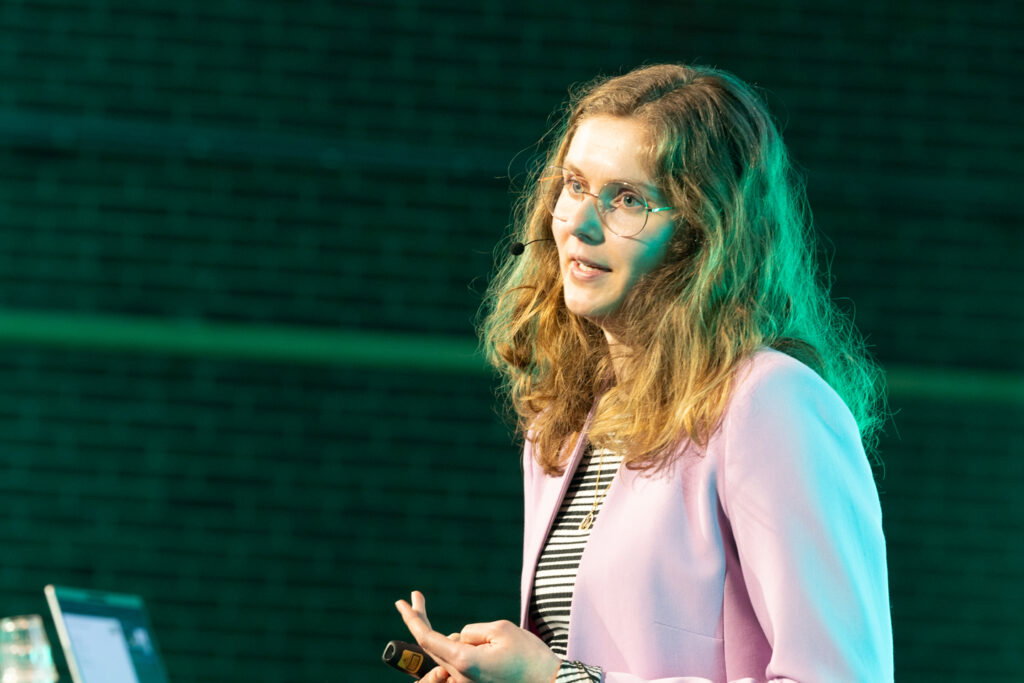
Lizzy van Sterkenburg, AI Governance Officer at Alliander.
A single standard training course on how to effectively work with AI is not enough. In 2024, in response to the European AI Act, Alliander launched customized AI literacy programs. Developers want to know how to apply legislation to their work, while procurement and contract management teams need to assess which AI providers to source from; IT architects, in turn, have entirely different questions. “As an organization, we had to start learning differently.” Now, employees at Alliander are also learning about AI on their own initiative. For example, teams organize their own so-called “chapter days” on AI.
Education must reinvent itself
So if the nature of work changes, vocational training programs must change as well. René van der Burgt, associate director at Avans University of Applied Sciences and a participant in AIC4NL, says, “Higher professional education must transform itself. What we’re doing now is losing its raison d’être.”
“The law states that the transfer of knowledge is central. That’s exactly what AI is very good at.” He sees the need to transition from a knowledge institution to a place for personal development, with instructors serving as facilitators of meaningful learning experiences. Because knowledge has now been democratized: “It’s about the ability to act. You need knowledge to be able to do something, and that’s very difficult to replicate.” Want to know what else the impact of AI means for higher professional education? Read this interactive exploration.
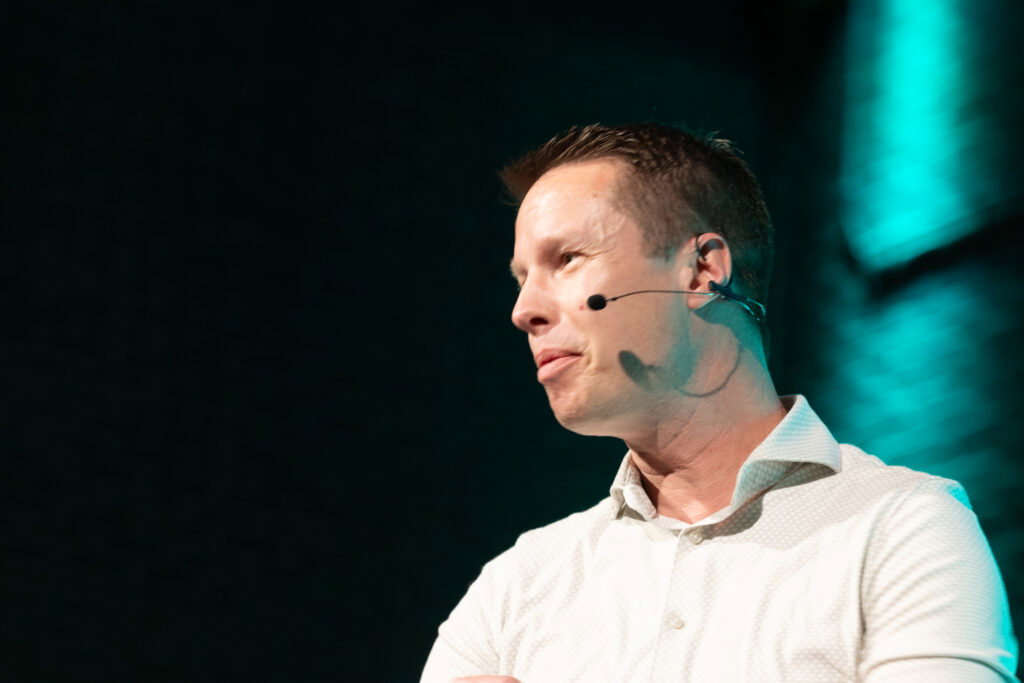
René van der Burgt, Associate Director at Avans University of Applied Sciences
Npuls Survey
The Npuls study shows that educational programs can already start addressing this. The message to vocational, higher vocational, and university-level institutions: don’t wait. There is already room within existing frameworks, through electives, minors, and modules. Monitor labor market developments and involve not only employers but also employees and students in this process, because they are the first to see how tasks are actually changing.
Sources
- McKinsey (2023) – The Economic Potential of Generative AI: The Next Productivity Frontier
- World Economic Forum (January 2026) – Four Futures for Jobs in the New Economy: AI and Talent in 2030
- Npuls (June 23, 2026) – Exploration of AI, Curriculum, and the Labor Market
- AIC4NL – AI Doesn't Require Less IT Talent, but More Talent with Different Skills (LinkedIn)
- AIC4NL – Learning Communities
- IVTO – Interactive Exploration: Higher Professional Education in Transition
This article looks back on the breakout session of the AIC4NL working group on Talent, Knowledge, and Skills during the Dutch AI Congress 2026, featuring contributions from Marloes Roelands (AI Coalition for the Netherlands), ETNA Coffee Technologies, Alliander, and Avans University of Applied Sciences. The full report, “AI, Curriculum & Labor Market,” is available on the Npuls knowledge base.