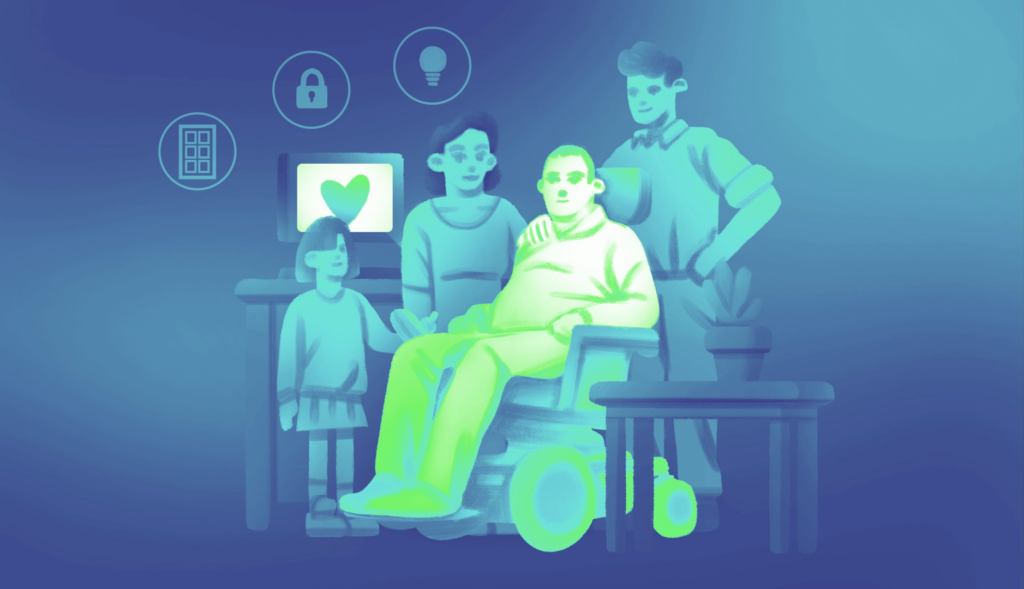
For people with severe disabilities who are unable to speak or move, communication can be extremely difficult. Dr. Julia Berezutskaya’s research, funded as part of the National Growth Fund project AiNed, aims to develop a system that allows users to communicate directly through their brain activity, without having to type or move.
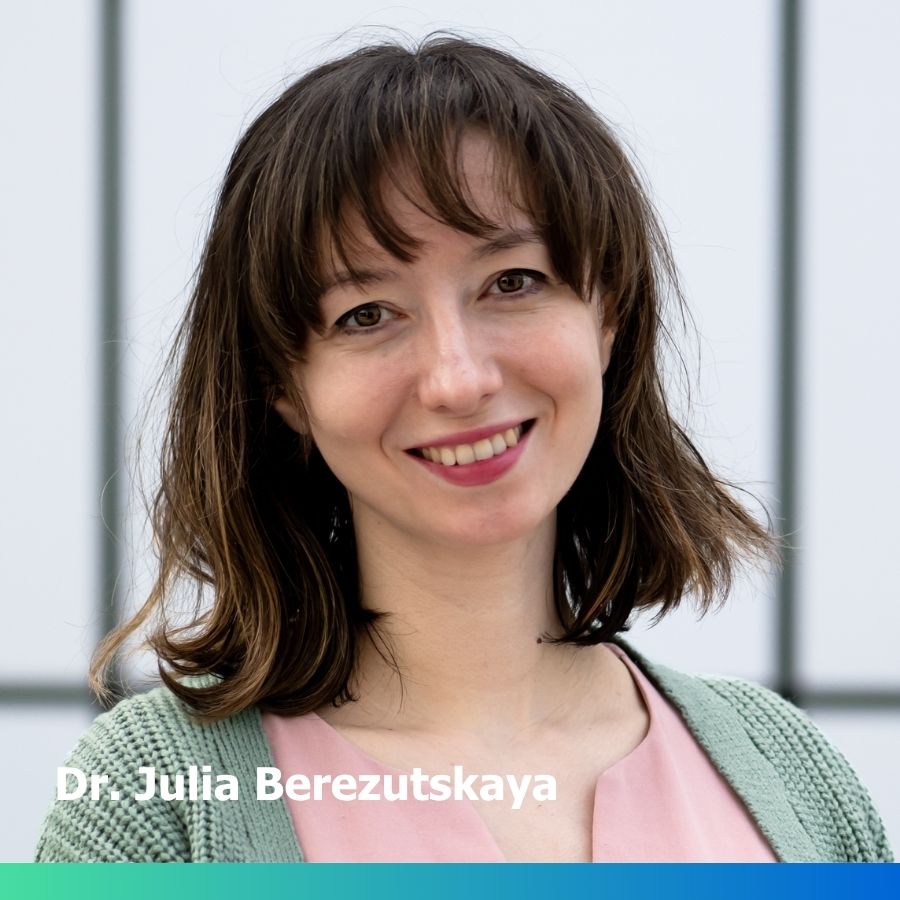
The research is part of AiNed XS Europe, which is coordinated by AIC4NL and carried out in collaboration with NWO (the Netherlands Organization for Scientific Research). These relatively small, short-term research projects lay the groundwork for larger European collaborations and the AI innovations of tomorrow. Now that the projects have been completed, we’re looking back on the results together with the researchers.
Text: Aafje Sierksma | Photo: Max Philippi
From Brain Signals to Communication
“We’re collaborating with various companies that are developing brain implants capable of recording brain activity,” Berezutskaya explains. These signals are then analyzed to determine what a person is trying to communicate. “That’s a challenge, because brain activity is susceptible to noise.” Participants in earlier studies who were able to communicate through alternative means—such as eye movements—therefore identified and eliminated errors in the translation. This made it possible to assess the accuracy of the translations and improve performance.
Building a "vocabulary" of brain signals
The main focus of the AiNed project is not on the brain implant itself, but on the data stored in it. The team is using brain data collected at the University Medical Center (UMC) Utrecht to create a large dataset. “We use this brain data to build a kind of vocabulary of brain signals,” Berezutskaya explains. “AI is fundamental to translating those brain signals into meaningful output.” The goal is to develop a model that can recognize patterns in brain activity and translate them more quickly and accurately.
“The data from brain implants is unique,” she says. As a result, current systems often require long training periods for each new user. The new approach aims to change that. With a shared vocabulary, new users could get started with a brain-computer interface much more quickly, since the system would already have a reference for interpreting signals.
Toward Practical Application
The goal is to bring the entire system into everyday use. However, significant challenges remain. As a medical device, the technology must meet strict regulatory requirements. “It requires a lot of inspections, tests, and clinical trials,” she explains. According to Berezutskaya, practical use is still years away. “For brain implants, it will likely take at least another five to ten years,” she says, noting that the companies developing the technology are still in the process of obtaining approvals for safety and efficacy.
Personal and Social Impact
The project contributed to the founding of a startup,UCANACT. Berezutskaya: “The NGF AiNed XS Europe project provided us with the knowledge and confidence that we can build something useful.” The startup has already received recognition, such as the UREKA Megachallenge Innovation Award from UMC Utrecht and a prize in the Academic Startup Competition. The mission is clear: “To build a solution that helps patients and is available everywhere,” says Berezutskaya. “With an initial focus on Europe and expansion to the United States and beyond.”
About the National Growth Fund (NGF) AiNed XS Europe
The NGF AiNed XS Europe call, developed in collaboration with NWO, has funded forty one-year projects that enable researchers to conduct curiosity-driven, high-risk AI research in collaboration with European partners. It supports the rapid exploration of bold ideas where the outcomes are uncertain, but every result contributes to scientific progress. Participants in the NGF AiNed XS Europe call reviewed each other’s proposals. Berezutskaya describes this as enlightening: “That approach helped us write better proposals and evaluate ideas. It builds valuable skills for the academic world and beyond.”
Source: NWO