Analysis Apply AI strategy
The Netherlands on the move - from pilot to production
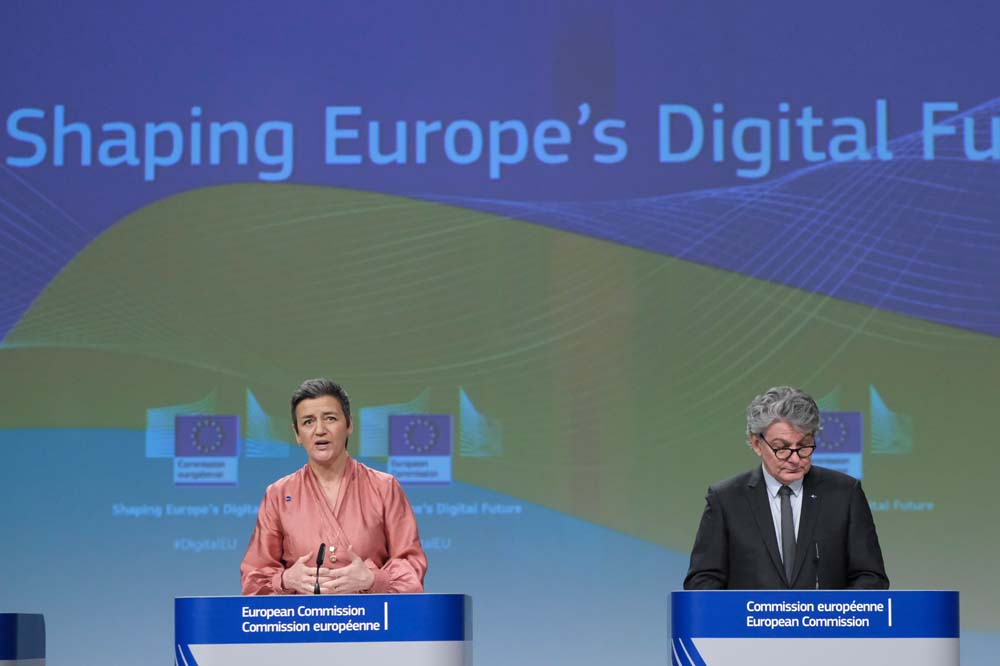
The European Commission wants businesses and local governments to really take advantage of the opportunities offered by AI now. The new Apply AI strategy shifts the focus from regulation to implementation: concrete work within government and business, with visible results.
From policy to practice
It is committed to application and scale-up. Experience Centres for AI give regions one recognizable entry point to tools, expertise, test facilities and European cooperation. Strengthening existing European Digital Innovation Hubs (EDIHs) into AI Experience Centers will create a practical gateway in all regions: a one-stop shop for entrepreneurs, developers and public service providers - nearby, and connected to European funding and knowledge.
Computing power and data spaces enable further upscaling. Thus, with data-driven decision-making, predictive models and smart automation, SMEs and regional governments can increase quality, control costs and use scarce capacity more intelligently - without compromising European values.
Netherlands: organizing, scaling up and connecting
The stakes: accelerate sectoral adoption, let SMEs benefit, strengthen European autonomy and thus become less dependent on American and Asian Big Tech. For the Netherlands this means: organize, scale up and connect - fast, smart and in line with European standards and programs. Now is the time to move from pilot to production: link resources to the spearheads of healthcare, energy/climate, security and agrifood and deliver visible results for citizens and businesses.
Public sector as launching customer
It positions the public sector as a testing ground for safe and responsible innovation. Apply AI encourages governments and businesses to take an AI-first approach: explicitly answering how AI can accelerate, simplify and make it sustainable in every policy issue.
Computing and data capacity
Infrastructure grows with it. Apply AI links adoption to compute and data: from AI factories for development, fine-tuning and testing to heavier training and scientific breakthroughs through RAISE (Resource for AI Science in Europe), to be launched in November. Dutch teams must be able to scale up barrier-free; that requires practical access to European compute, reliable data spaces and interoperability agreements. Reliable, accessible and qualitative data remain crucial in this regard and align with the European data strategy.
Skills & talent
Technological innovation only succeeds with sufficient skills. It invests through Union of Skills and new AI research networks within RAISE. In cooperation with education, companies and knowledge centers, training paths, internships and apprenticeships are created that strengthen the regional labor market.
Regulatory & compliance-by-design
Regulation is necessary with a system technology like AI, but it must go hand in hand with investing in a strong Dutch AI position. Apply AI is not separate from the European AI Act: social value creation must be based on responsible application of AI and go hand in hand with security, transparency and non-discrimination. For Dutch organizations, this means compliance-by-design and early involvement of ethics, security and legal teams so that innovation does not run aground later in the project.
Getting started with AI
Brussels is laying a foundation with €1 billion through existing programs - as a flywheel for projects with tangible impact. A clear assignment lies with the member states: bring supply and demand together, remove friction and scale up what works. For the Netherlands, this is implementation work: from pilot to production, with the government as launching customer. This is how AI grows from single pilots to scalable solutions that improve government and healthcare and strengthen industry. Apply AI provides the framework. Now it is up to the Netherlands to set the pace.