How 350 healthcare organizations are working with AIC4NL to build a shared AI infrastructure
Healthcare workers in elder care spend a significant portion of their time on administrative tasks and searching for information. This is evident from previous research on reducing the administrative burden in the Nursing, Elderly, and Home Care (VVT) sector. The sector wants to reorganize this, but most healthcare organizations are too small to undertake this digital transformation on their own. Capacity is often lacking, which means knowledge remains siloed and pilot projects don’t move forward.
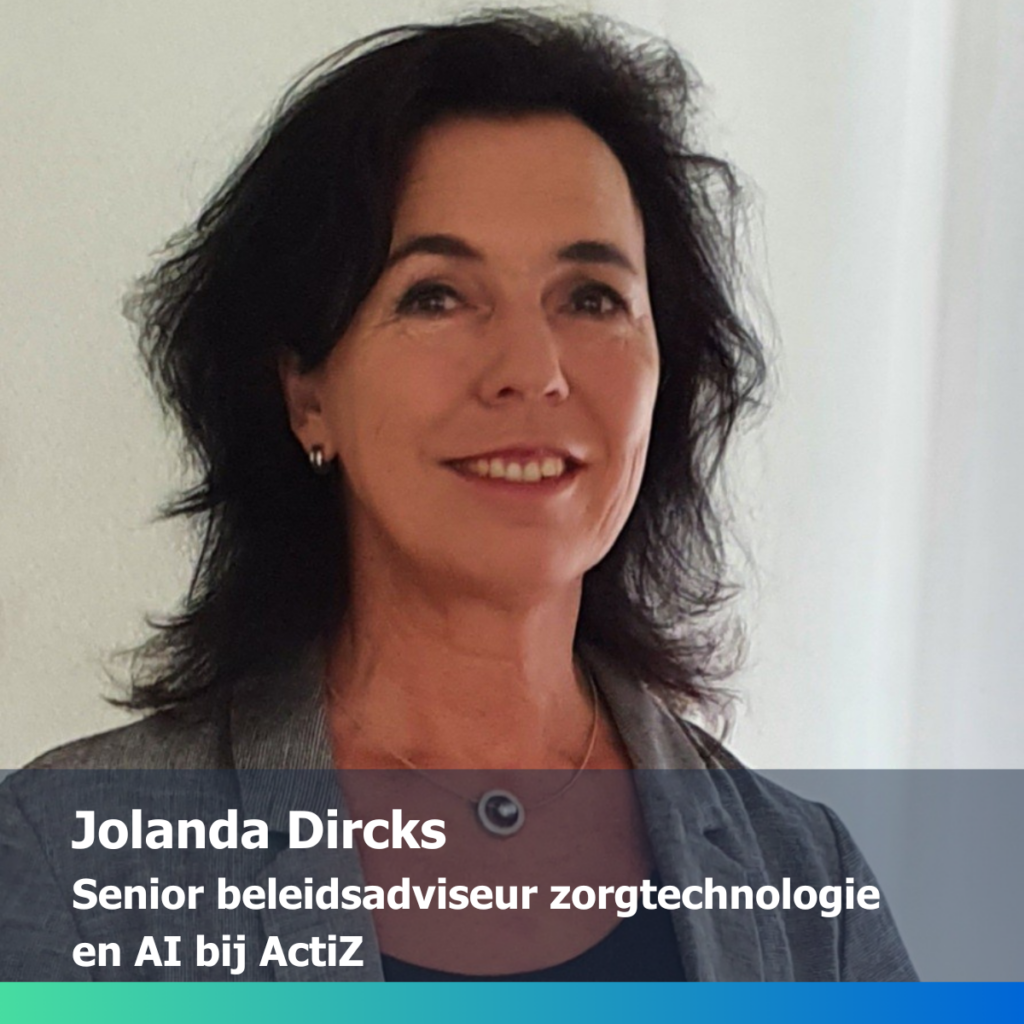
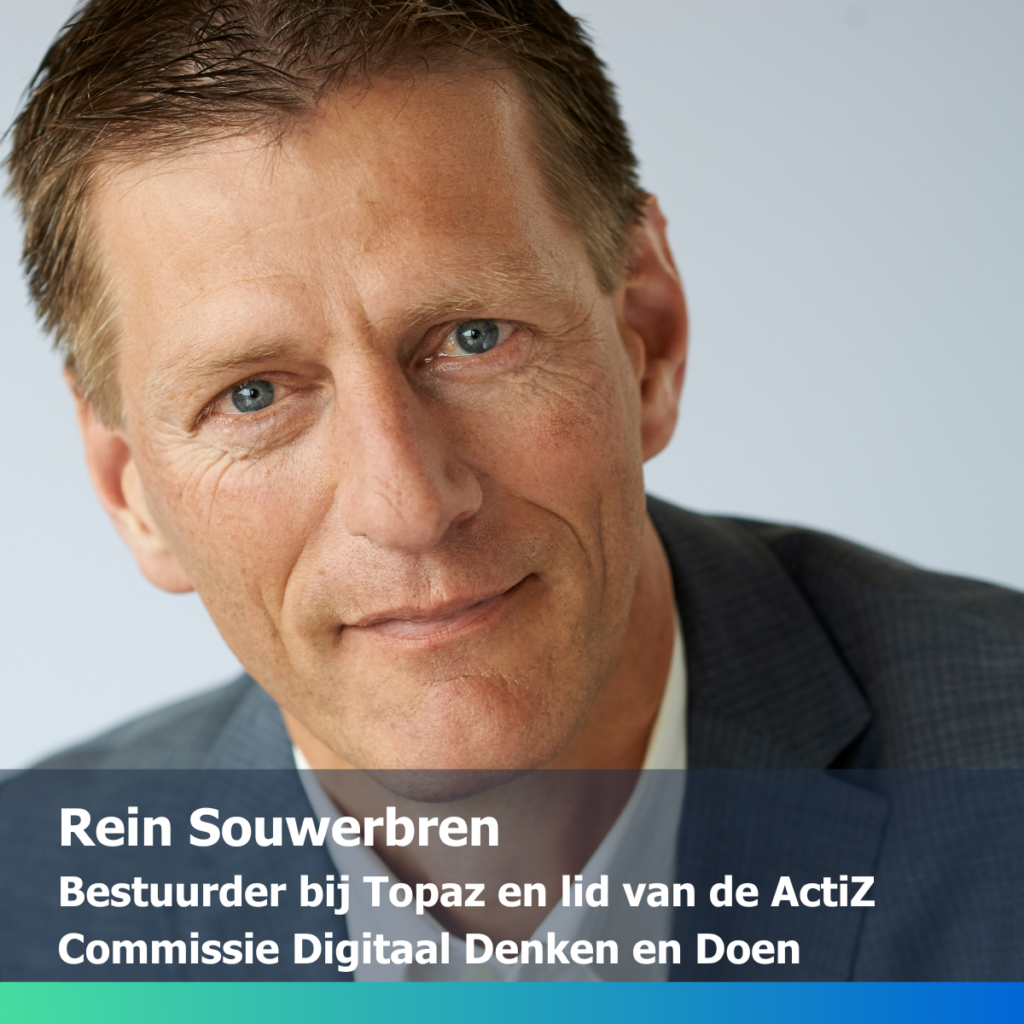
Precisely because many organizations face the same limitations, AIC4NL, at the request of the Ministry of Health, Welfare and Sport, has launched an initiative to break down these silos. In this role, AIC4NL brings parties together and helps to pool knowledge and development. Together with ActiZ and healthcare organizations, they are working on a shared approach, in which a joint infrastructure is being built step by step. This is desperately needed, say Jolanda Dircks, senior policy advisor for healthcare technology and AI at ActiZ, and Rein Souwerbren, director at Topaz and member of the ActiZ Committee on Digital Thinking and Action. “Many people are doing something with AI, but it remains isolated,” says Dircks. Souwerbren agrees: “Every organization and region comes up with its own solutions, even though many processes are similar.”
A digital assistant for healthcare workers
Organizations that take on this challenge start with their employees: where is the regulatory burden, and what tasks unnecessarily take up too much time on a daily basis? “The people doing the work know what’s most needed. Start with those issues,” advises Dircks.
This need has given rise to an initial application: a digital colleague that assists employees with questions about leave, protocols, and other administrative tasks. You log in once, ask your questions, and immediately receive the correct answers. “You want to make it as simple as possible for the professional,” says Dircks. “One place where you ask your question, and behind the scenes, it’s handled by reliable AI.”
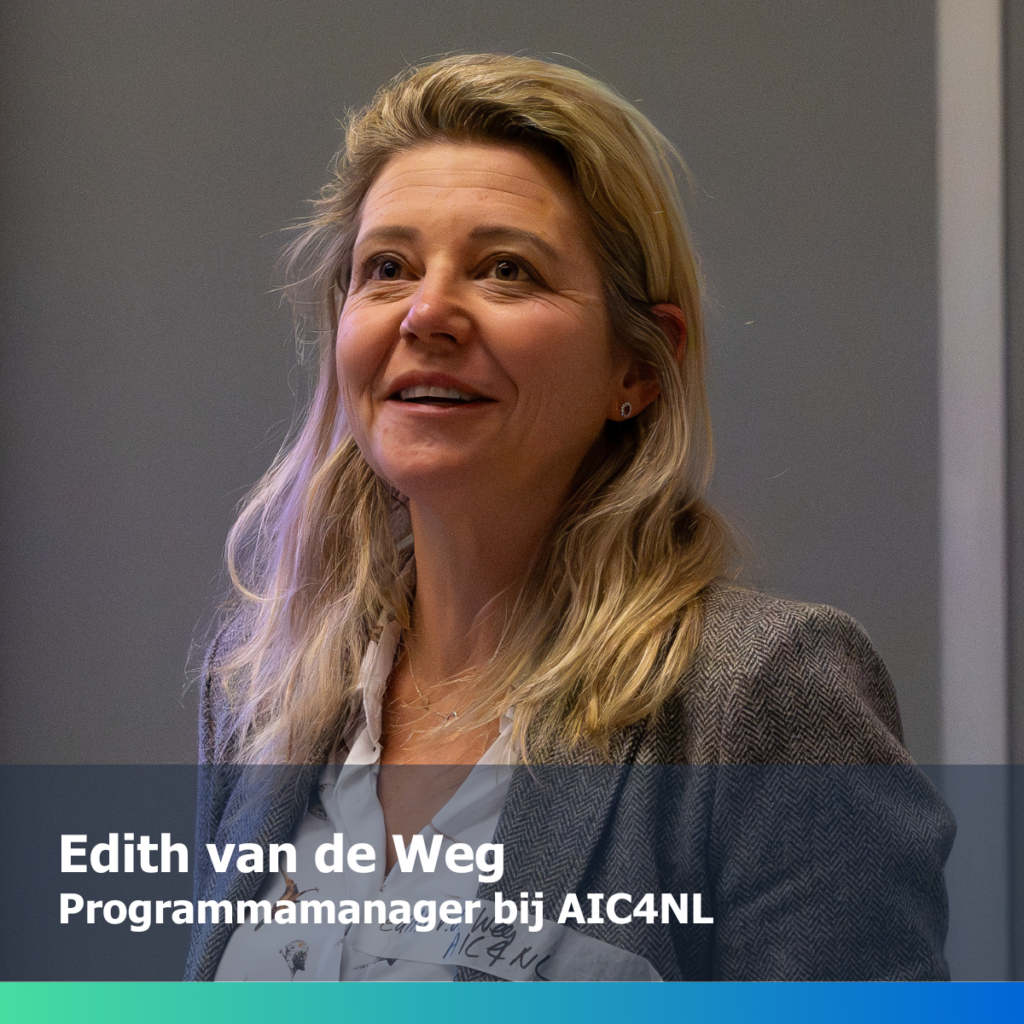
In many organizations, employees are already using ChatGPT to get things done. “That’s shadow IT, and you have no visibility into it,” says Edith van de Weg, program manager at AIC4NL. “That’s why we want to offer that same convenience, but in a way that’s secure and manageable.” Dircks adds: “Employees are having to open more and more applications. That takes time that they often don’t have.”
A shared infrastructure
The first step is a platform linked to various systems, where healthcare workers can ask questions and retrieve information directly from the source. It grows step by step, much like a library or Spotify. For each employee, you can configure what is and isn’t visible.
Many of the same questions arise in every organization. By addressing them together, there’s no need for everyone to develop separate solutions. This shared foundation gives rise to a common infrastructure: an open environment with building blocks that organizations can use and adapt.
A key principle is that information stays with the source. For example, protocols remain with Vilans, and collective bargaining agreement information stays with the owner. “If you don’t do this together, you’ll keep duplicating efforts,” says Souwerbren. “And then you can never be sure you’re working with the most up-to-date information.”
Focus on economies of scale right from the start
AIC4NL brought healthcare organizations and ActiZ together around the table as early as the design phase. By building this together from the start, we’ve created broad support. Van de Weg: “In other sectors, you often see organizations trying to do things on their own. Here, we’ve been working together from the very beginning. That ensures that people truly commit to what’s being built.”
This means that innovations do not have to be adapted from scratch every time. Developers and suppliers build on a shared foundation, so that what works in one organization can quickly be applied across the entire sector.
This also requires a commitment from the parties involved. Funding has not yet been structurally secured, and decisions need to be made regarding governance. Souwerbren: “You have to be willing to share and let others in on the process. And you have to be able to stick to the agreements you make together.” Van de Weg: “You want to keep up the pace, but also make sure everyone is on board.”
Responsible Development of AI in Elderly Care
The first phase of the infrastructure is currently being built, with the goal of having the first application ready by the summer of 2026. If this works, it can be rolled out more widely, and the platform will be gradually filled with applications. Ultimately, the goal is for healthcare workers to spend less time searching and on administrative tasks, make fewer mistakes, and have more time to focus on patient care. With this approach, AIC4NL aims to demonstrate how AI can contribute to structural improvements in healthcare at scale.
“There’s a lot of energy and enthusiasm behind this partnership. People want to get involved,” says Souwerbren. Van de Weg adds: “Elderly care is often seen as conservative. But what’s happening here is actually very innovative. This shows that the sector can move faster than is often thought. And that aligns well with what we at AIC4Nl stand for: a responsible and faster application of AI in, among other things, healthcare!”