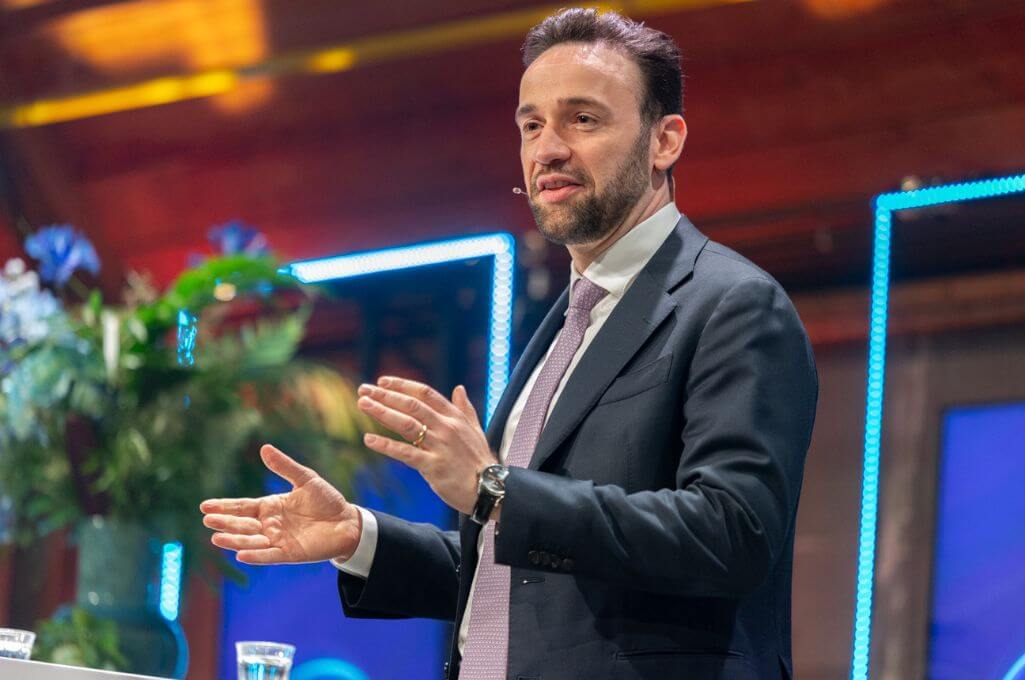
The Netherlands is set to adopt a comprehensive AI agenda for agriculture, food, and nature. This was announced during the Dutch AI Congress in Utrecht on April 14, where State Secretary Silvio Erkens also emphasized the importance of AI for the sector. A broad coalition of industry stakeholders and research institutions will jointly shape the agenda and is calling on the field to join in.
Turning innovation into impact
The Netherlands faces major challenges in the areas of agriculture, food, and nature. Artificial intelligence (AI) can play a decisive role in addressing these challenges. However, to truly harness that potential, a coherent AI agenda for agriculture, food, and nature must be established. Currently, there are many valuable projects, but they still lack sufficient coherence, coordination, and scale. The field—ranging from farmers, horticulturists, and nature conservationists to technology developers and research institutions—is actively seeking greater focus, leadership, and direction to translate innovation into practical impact. A domain-specific agenda provides that stability and clarity.
That is the core message of the call issued by AIC4NL, together with the Ministry of Agriculture, Fisheries, Food Security and Nature, Wageningen University & Research, TNO, Samenwerking Noord, the Ministry of Economic Affairs and Climate Policy, Economische Agenda Nij Begun, and the Province of Groningen, urging everyone in the sector to join the AI agenda.
“A national agenda serves as a solid foundation: a house built on a firm foundation, with clear roles, shared goals, and long-term commitment. Data is crucial to this. Without AI-ready data—made available securely, reliably, and responsibly—AI cannot fulfill its promise. Consider the sharing and utilization of data in an AI factory, as well as sectoral infrastructures, with an eye toward privacy, security, and ownership. Dutch and European values such as sovereignty, fairness, and ethics must guide this,”says René Langevoort, Head of the Agriculture and Food Division at AIC4NL.
Support from the administration
In his keynote address at the Dutch AI Congress on April 14, State Secretary Silvio Erkens (Agriculture, Fisheries, Food Security, and Nature) compared the current state of AI to a new “Sputnik moment”: a global race in the field of AI. He outlined four priorities for the sector: more room for entrepreneurship, placing innovation higher on the agenda, strengthening food security in light of the geopolitical situation, and ensuring societal legitimacy. Erkens said about the use of AI in Dutch agriculture and horticulture: “Thismust take concrete form in an AI agenda that we draw up together with sector stakeholders. With the goal of responsibly deploying AI and strengthening a future-proof agricultural sector. So that we remain among the world’s best.”
Double transition
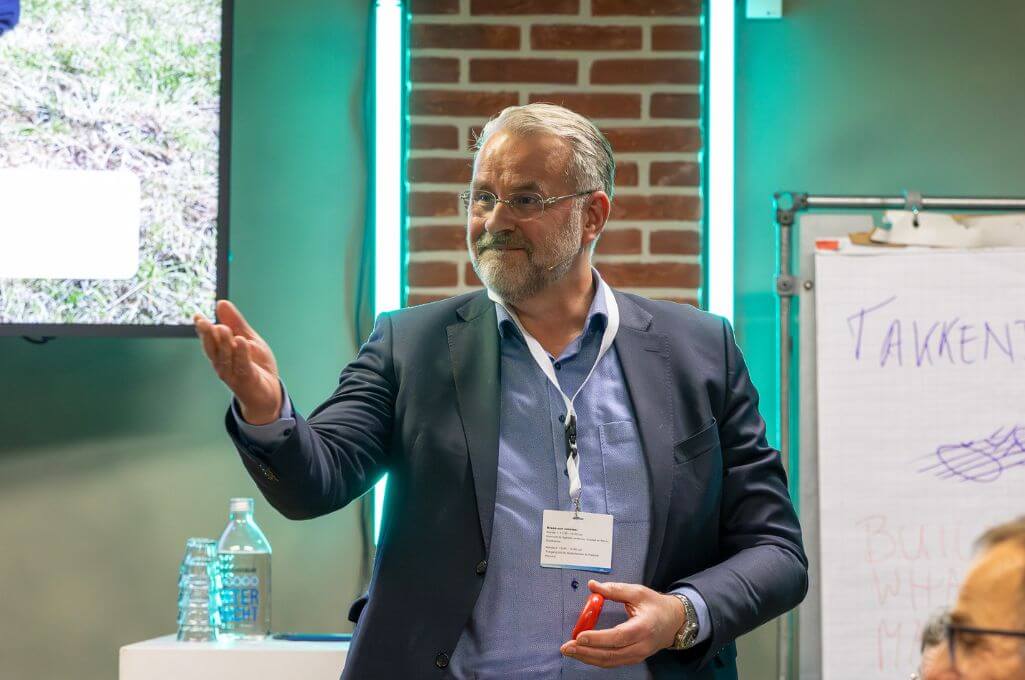
The Netherlands is in a strong position. The sector ranks first in Europe in the use of robotics, farmers have a high level of knowledge, and the country is also a leader in connectivity. But the challenge is complex, emphasizes Pim van der Horst, Program Manager & Team Coordinator for Digitalization at the Ministry of Agriculture, Fisheries, Food Security, and Nature: “We are in the midst of a dual transition. On the one hand, the sustainability transition: future-proof food systems, biodiversity, water quality. On the other hand, the digital transition, with AI as a key component. We want to leverage that digital transition to support the sustainability challenge.”
AI is a system technology that accelerates innovation and transitions, provided it is properly orchestrated. For adoption by farmers, horticulturists, and nature conservationists, there is one key condition: AI innovations must be positive, unambiguous, integrated, and practical. The goal is to gain a firmer grip on business operations and to have a positive impact on the revenue model and sustainability—above all, without adding extra complexity. A national agenda ensures that developments align with practical realities and that societal challenges are addressed. AI can help with major issues, such as future-proof agriculture and biodiversity restoration, and in maintaining our strategic autonomy in the future.
Call for Participation
By exploring an AI agenda, the coalition aims to connect existing ecosystems, provide an overview of current activities, encourage cross-sector collaboration, and move from an agenda to concrete action. Organizations and professionals who wish to contribute can contact us at landbouwenvoeding@aic4nl.nl or reach out to one of the participating parties. They will then be kept informed about the next workshop or webinar.