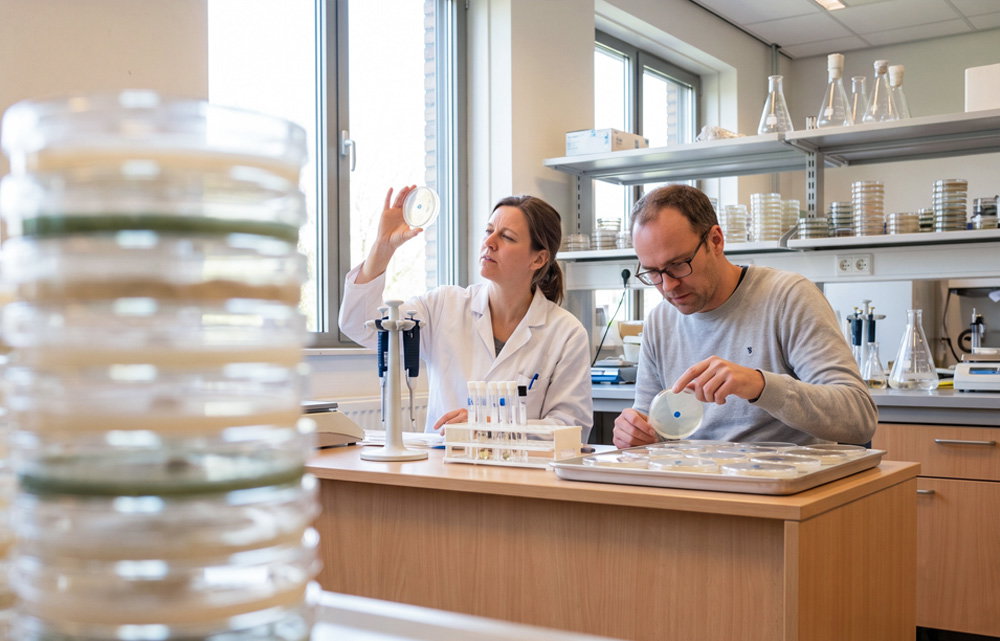
Fungi are everywhere: in forests, in our kitchens, and even in industrial processes. Yet their potential remains largely untapped. Mao Peng’s research, funded as part of the National Growth Fund project AiNed, explored how artificial intelligence (AI) can help us understand and apply fungi for applications such as sustainable materials, biofuels, and alternative proteins. “Fungi can convert plant material into useful substances, but the underlying biological mechanisms are difficult to unravel,” Peng explains.
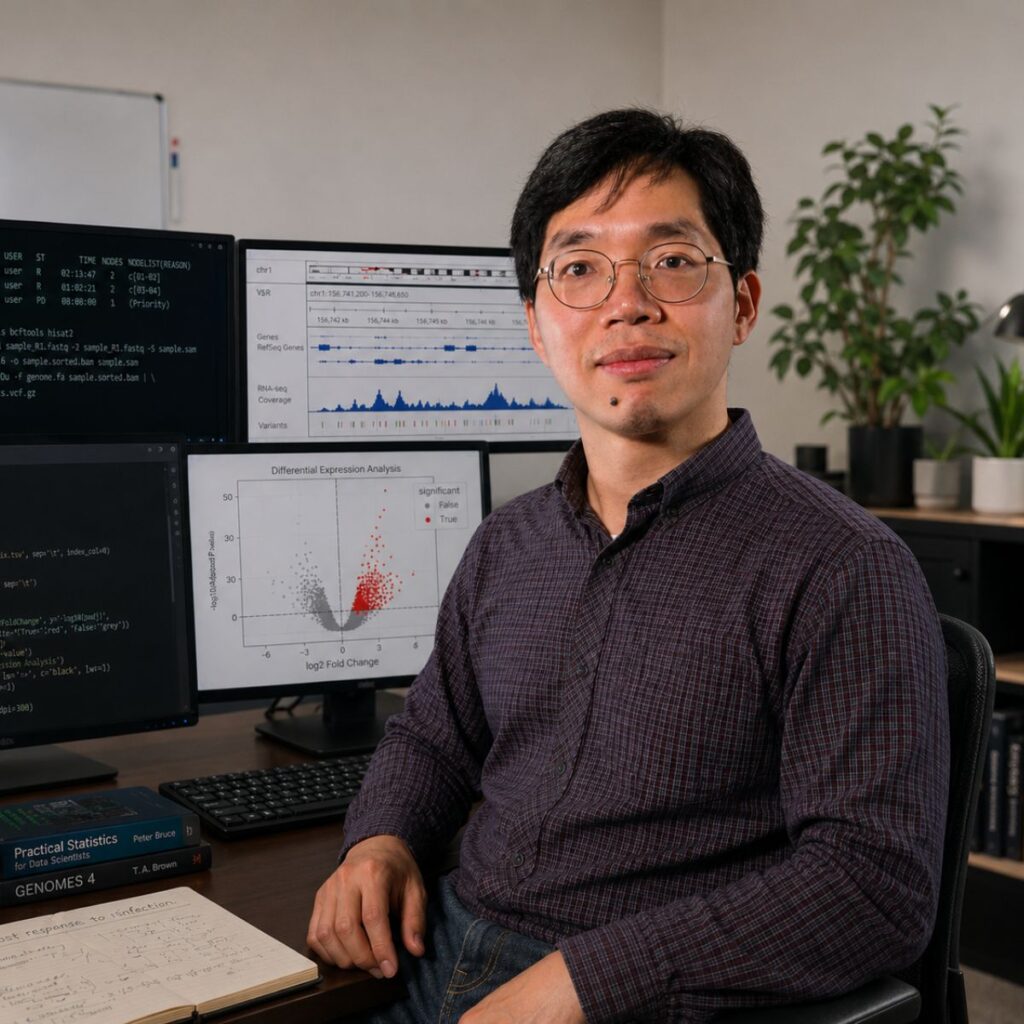
The research is part of AiNed XS Europe, which is coordinated by AIC4NL and carried out in collaboration with NWO (the Netherlands Organization for Scientific Research). These relatively small, short-term research projects lay the groundwork for larger European collaborations and the AI innovations of tomorrow. Now that the projects have been completed, we are looking back on the results together with the researchers.
Text: Aafje Sierksma | Photo: Mao Peng
Combining Data to Uncover Biological Mechanisms
Peng’s project focuses on applying AI to integrate and analyze various biological datasets in order to discover patterns and unravel biological mechanisms. A key application is identifying the proteins that fungi use. These proteins are not only essential for fungal growth but also for industrial applications. “We use similar proteins in everyday products such as laundry detergents,” says Peng. “They are also crucial for biofuel production, such as ethanol from plant-based biomass.” Previously, identifying such proteins required time-consuming experimental work. A large number of “candidate genes” from various fungi had to be tested to determine which gene encodes the protein in question. AI enables a more efficient approach. “Instead of testing large numbers of genes, we can prioritize what AI identifies as the most promising candidates. That saves time and increases the chances of success,” Peng explains.
Recognizing value that goes beyond advanced AI methods
The project demonstrates the importance of data integration in fields such as fungal genomics and evolutionary and physiological research, where datasets are often fragmented. Combining these different types of data can yield valuable biological insights that previously required a great deal of time and effort. A key insight is that innovation does not necessarily depend on the use of the most advanced AI techniques. “We use relatively standard machine learning methods and apply them to a challenging biological problem,” says Peng.
Support for Sustainable Biotechnology
Peng’s work has already contributed to the selection of fungal species for producing alternative protein sources from plant material, as a substitute for meat. Such applications are becoming increasingly relevant in the context of climate change and the need for sustainable production systems. Fungi could play a key role in future “cell factories,” where biological organisms are used to produce energy, food, and materials more efficiently. According to Peng, building networks between researchers and industry is therefore crucial. The open databases and tools developed within his project are a step forward in making the research accessible to a broader community.
Instead of testing large numbers of genes, we can prioritize the most promising candidates—Mao Peng, bioinformatician at the Westerdijk Fungal Biodiversity Institute
Personal and Academic Impact
For Peng, the AiNed grant had a significant impact on both his research and his career development. “It’s difficult for early-career researchers to secure funding and gain independence,” he says. “This grant gave me confidence and provided the opportunity to test new ideas and build expertise.” The project also strengthened his position within a broader shift toward data-driven biological research. Peng considers AI essential for accelerating discoveries in biotechnology. “By using AI to analyze large and diverse biological datasets, we can better understand complex biological systems and develop sustainable solutions more quickly.”
About the National Growth Fund (NGF) AiNed XS Europe
The NGF AiNed XS Europe call, developed in collaboration with NWO, has resulted in forty one-year projects that enable researchers to conduct curiosity-driven, high-risk AI research in collaboration with European partners. It supports the rapid exploration of bold ideas where the outcomes are uncertain, but every result contributes to scientific progress. Participants in the NGF AiNed XS Europe call evaluated each other’s proposals. Peng found this evaluation system to be creative and unique. “It encourages researchers to be more open. We can’t just close the door and pursue our own science; it’s also necessary for others to understand our research.”
Source:NWO