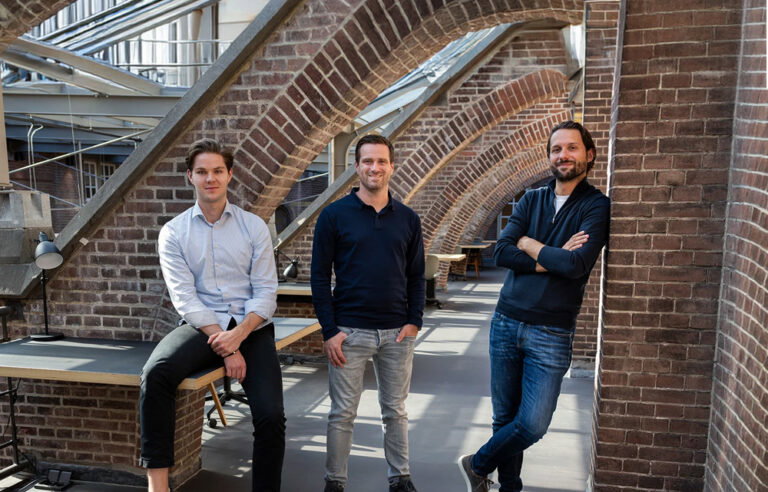
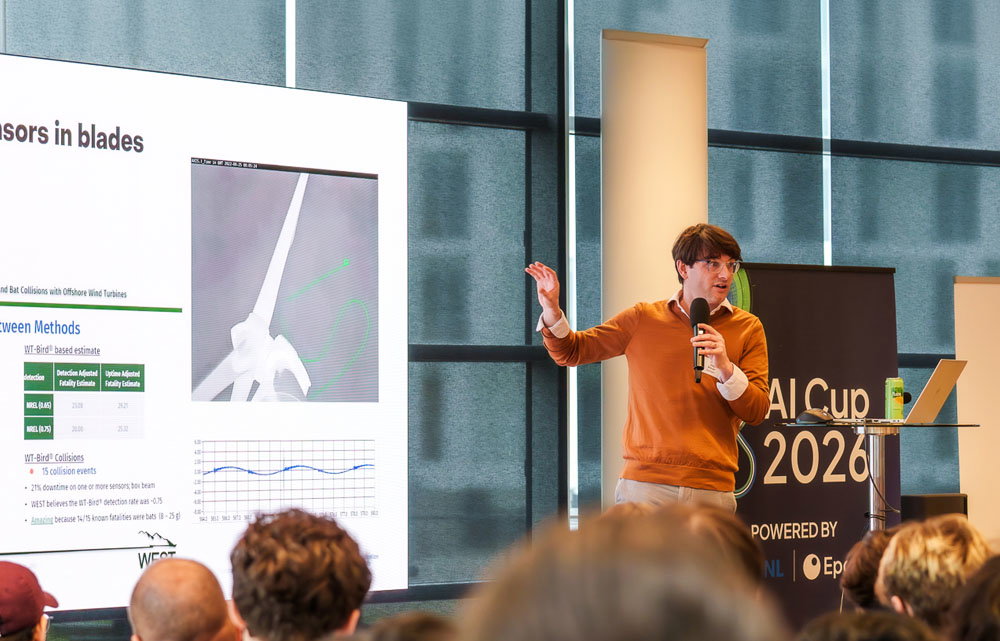
According to Piet Jan Bloem, AIMZ’s director of strategy, we need to focus more on managing energy demand rather than generating it as part of the energy transition. AIMZ is doing this through AI-driven control systems in buildings. This is a step in the right direction, but AIMZ is thinking bigger and broader. With Breaking Barriers, it aims to create international impact by forming a consortium capable of developing and delivering AI services across the full breadth and depth of the energy sector.
Save first. Then generate.
With AI-driven building management, AIMZ ensures more efficient energy use. The goal is simple: learn from energy consumption and then reduce costs. According to Piet Jan, that’s the most effective approach. “With an average savings of €2 to €3 per square meter, we save our customers a total of €2 million annually. But if we’re able to consume less energy, we can also manage consumption flexibly using AI. Everyone is focused on generating power and installing batteries, but consuming energy more flexibly avoids the need for investments and reduces costs across the board. And yes, solar and wind farms are necessary, but applying AI to energy demand is a double-edged sword. And it prevents or resolves grid congestion.”
I would like to see a comprehensive suite of AI services for the energy sector.
Piet Jan Bloem, Director of Strategy at AIMZ
See the results for yourself
It’s often difficult to convince building managers that saving energy with AI actually works. Piet Jan: “The only obstacle to adopting our solution is human decision-making. It’s like having a hundred cars with cruise control, but everyone wants to see it on their own car.” But once they see it, there’s a lot of enthusiasm. At the Ikazia Hospital in Rotterdam, AIMZ started with one wing; we’re now working on a further rollout. Last year, we launched a pilot with Hanze University and the City of Groningen, which has since expanded to about 30 locations, and in Friesland, the system is now up and running at all OVO locations. People can see for themselves that it’s making a difference.”
Do something groundbreaking
Simply connecting new buildings isn’t enough. According to Piet Jan, AI has the potential to address some of the societal challenges surrounding the energy transition. “Of course, we can use Breaking Barriers to do more marketing, adopt a more sales-oriented approach, and thus promote our solution. But that’s not‘breaking’—it’s notgroundbreaking enough.Wehave a smart solution, but we need more than that; I’d like to see a comprehensive package of AI services for the energy sector.”
Bundling AI Services
To bring this comprehensive package to life, AIMZ is leveraging Breaking Barriers’ network and strategic guidance for a targeted mergers and acquisitions process. “It’s about bringing the right parties together so that we, as the Dutch business community, can offer a complete AI package both domestically and internationally. “If you combine our services with AI services for energy supply, grid congestion, and balancing, you can essentially solve any problem in the energy transition,” Piet Jan concludes.
About AiNed Breaking Barriers
Breaking Barriers helps Dutch AI startups accelerate their growth. The program opens doors to investors, mentors, companies, government agencies, and international markets. Breaking Barriers is part of the National Growth Fund’s AiNed program and is coordinated by AIC4NL.
Objection and appeal processes are resource-intensive for government agencies. There are large numbers of cases, complex regulations, and a great deal of administrative work...
With "Breaking Barriers," the Eindhoven-based AI startup aims to establish a Trust Center, validate a European sovereign AI infrastructure, and expand internationally. At...
For AI startups looking to grow faster As an AI startup, you want to break through, scale up, and make an impact. Building a groundbreaking company comes with many challenges. How do you attract
The Dutch energy system is undergoing fundamental changes. The electrification of transportation, industry, and the built environment is driving up demand for electricity, while the supply is shifting toward weather-dependent, decentralized sources. Grid congestion limits
To provide the best experience, we use technologies such as cookies to store and/or access device information. Giving consent to these technologies allows us to process data such as browsing habits or unique IDs on this site. Not giving consent or withdrawing consent may adversely affect certain features and capabilities.
Functional
Always active
The technical storage or access is strictly necessary for the legitimate purpose of enabling the use of a specific service explicitly requested by the subscriber or user, or for the sole purpose of carrying out the transmission of a communication over an electronic communications network.
Preferences
The technical storage or access is necessary for the legitimate purpose of storing preferences that are not requested by the subscriber or user.
Statistics
The technical storage or access that is used exclusively for statistical purposes.The technical storage or access that is used exclusively for anonymous statistical purposes. Without a subpoena, voluntary compliance on the part of your Internet Service Provider, or additional records from a third party, information stored or retrieved for this purpose alone cannot usually be used to identify you.
Marketing
The technical storage or access is required to create user profiles to send advertising, or to track the user on a website or across several websites for similar marketing purposes.